

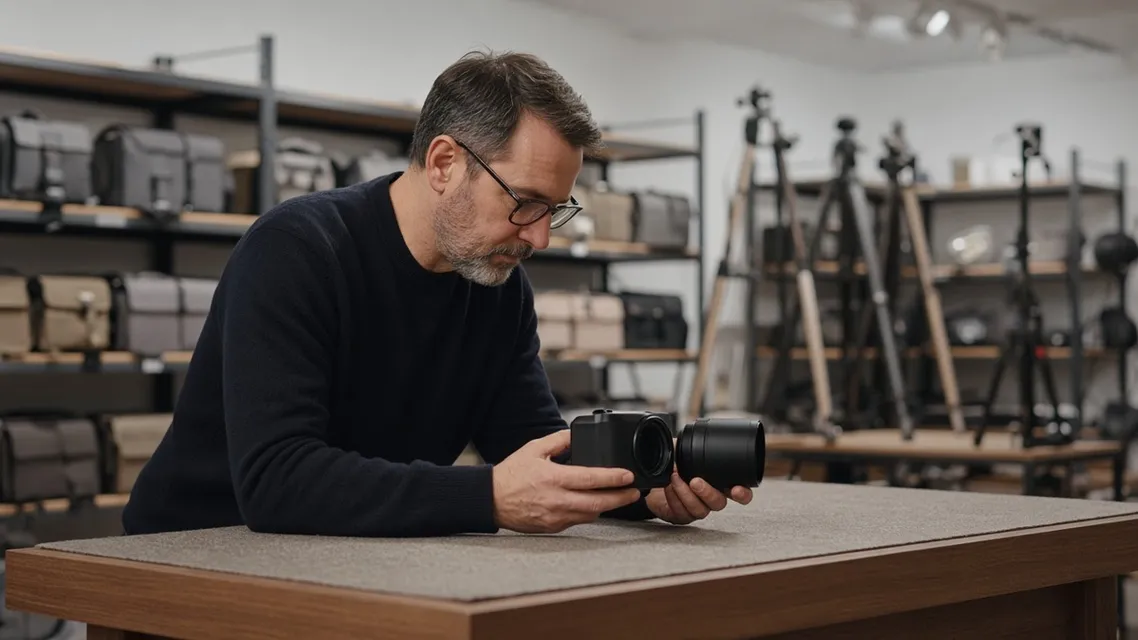
Camera stores, rental houses, studios and online resellers still buy most of their gear the same way other specialty retailers do: through authorized distributors, manufacturer dealer programs and a smaller set of independent photo wholesalers. The difference is the downside of a bad source. A grey-market body can look identical to a US model and still arrive with no domestic warranty, the wrong charger, or a serial number that the maker will not support.
This guide explains how US buyers source wholesale cameras and photography equipment in late 2026. It covers the main supplier channels, what is worth stocking, how to tell an authorized shipment from a risky one, the import and compliance checks that affect landed cost, and the 2027 trade shows where new kits are still launched. If you also sell adjacent consumer tech, see our guides to wholesale electronics distributors, wholesale TVs and wholesale audio equipment.
📌 Quick link: Cameras and Photographic · Digital Cameras · Digital SLR Cameras · Camera Accessories.
Who Buys Cameras at Wholesale, and Who Sells Them
The US Census Bureau classifies specialist photo wholesalers under NAICS 423410, Photographic Equipment and Supplies Merchant Wholesalers. The official description covers merchant wholesale distribution of photographic equipment and supplies, except office equipment. In practice, buyers also meet consumer-electronics distributors that carry cameras as part of a wider assortment, and manufacturer-owned dealer programs that sell only to approved accounts.
The customer side is broader than camera shops. It includes wedding and commercial studios, rental houses, schools and universities, content-creator retailers, and e-commerce sellers who want current bodies, lenses and lighting. Each of those buyers needs a slightly different mix: a rental house cares about service and serial-number tracking; a small store cares about margin, MAP (minimum advertised price) and whether a customer can get a US warranty.
| Supplier type | What they sell | Best for | Watch out for |
|---|---|---|---|
| Authorized / franchised distributors | New US-market bodies, lenses and accessories with full manufacturer support | Camera stores, rental houses and any buyer who must honor a US warranty | Dealer applications, MAP rules and minimum advertised-price monitoring |
| Manufacturer dealer programs | Direct or assigned-territory supply from the brand | Stores building a core brand assortment | Appointment standards and inventory commitments |
| Independent photo wholesalers | Mixed brands, studio lighting, bags, tripods, background and darkroom/print supplies | Accessories and fill-in brands around a core authorized line | Confirm which lines are truly authorized |
| Electronics distributors | Cameras as part of a wider consumer-electronics catalog | Retailers already buying TVs, audio or mobile accessories | Shallower photo-specific support and kit knowledge |
| Closeout, grey-market and online marketplaces | Current-looking goods at sharper prices | Low-risk accessories, never your hero inventory | Warranty denials, missing US chargers, and serials the brand will not support |
Most successful stores use a mix: one or two authorized sources for cameras and lenses, plus an accessories wholesaler for bags, tripods, filters and batteries. To build a shortlist, start in the Cameras and Photographic category, then follow our guide on how to find wholesale suppliers in the USA. The account-opening paperwork is covered in our guide to B2B wholesale supplier types, trade accounts and net terms.
What to Stock: Cameras, Lenses and the Attachments That Sell
A first-time photo buyer often over-orders camera bodies and under-orders the items customers actually come back for. Lenses, memory, batteries, bags, lighting and tripods turn faster and usually carry a healthier margin than flagship bodies, which are heavily price-compared online.
| Category | Typical items | Why it belongs in a wholesale mix | Sourcing note |
|---|---|---|---|
| Mirrorless and DSLR bodies | Current and last-generation interchangeable-lens cameras | The ticket item that brings customers in | Buy authorized US stock; record every serial number |
| Lenses and adapters | Prime and zoom lenses, mounts, filters | Often a higher-margin add-on than the body itself | Mount compatibility matters more than brand loyalty |
| Compact, action and vlogging cameras | Fixed-lens compacts, action cameras, creator-focused kits | Strong demand from casual and social-video buyers | Check battery and waterproof-housing availability |
| Lighting and support | Strobes, LED panels, stands, tripods, gimbals | Studio, event and content customers buy these repeatedly | Bulky freight; confirm wholesale pack sizes |
| Power, storage and bags | Batteries, chargers, memory cards, camera bags | Consumables that create repeat wholesale orders | Lithium batteries have shipping limits; see below |
| Optics and accessories | Flashes, mics, cages, cleaning kits, printing supplies | Fills out a ticket without another camera sale | Easier place to test a new supplier before you buy bodies |
If you already sell phones or computers, you may be tempted to treat cameras as just another gadget. The accessory attach-rate is closer to specialty retail than to a cell-phone accessories counter. Customers expect kit advice, and they notice if a charger, mount or card is the wrong standard.
Authorized Stock Versus Grey-Market Risk
Grey-market cameras are genuine products that entered the US outside the manufacturer's authorized channel, often bought in another region and resold here. They can look identical in a product photo and still cause expensive problems: no US warranty, a different firmware or menu language, a charger that does not match US outlets, or a brand that will refuse service when the serial number is checked.
Authorized distributors and dealer programs exist to prevent that. They usually require a business application, a resale certificate, and agreement to MAP policies. In return you get stock the manufacturer will stand behind. That is the inventory to put on your shelf and in your rental pool. Closeout lots and marketplace sellers can be useful for low-risk accessories, but they are a poor place to buy the camera a customer will bring back in six months.
A practical receiving checklist is short and worth doing on every body and lens: match the model and serial to the packing list, confirm the kit includes the US-spec battery and charger, keep the original serial-number record, and do not advertise a US manufacturer warranty unless your supplier is authorized to give you one.
Import Classification, Duties and Landed Cost
If you import yourselves, classification drives the bill. Traditional photographic cameras, flashlight apparatus and many camera parts sit under Harmonized Tariff Schedule heading 9006. Digital still cameras, television cameras and video camera recorders are generally classified under heading 8525. Those headings contain many statistical lines, and the duty is not the same on every line or every country of origin.
Some 9006 and 8525 lines have a free general (MFN) rate; others do not, and additional duties can apply depending on origin and the measures in force on the entry date. Do not copy a rate from a marketplace listing or an unofficial calculator. Classify the exact model with a customs broker if needed, then check the current rate in the official Harmonized Tariff Schedule before you quote a landed cost. Our broader electronics guides are a reminder that tariff changes in 2026 have been frequent enough that last quarter's spreadsheet can already be wrong.
Compliance: Radio Devices, Batteries and Resale Tax
Many modern cameras and accessories are also radio devices. Wi-Fi and Bluetooth cameras, wireless triggers, microphones and some gimbals are intentional radiators. The FCC's equipment authorization procedures apply to a wide range of those products before they can be marketed in the US. If you import, ask the supplier for the FCC ID and keep it with the shipment file. If you only buy from an authorized US distributor, this is usually already handled, but it is still worth knowing why a no-name wireless trigger can be a problem.
Lithium-ion batteries are the other recurring issue. Camera batteries, power banks and many LED panels are regulated as dangerous goods when shipped. The Pipeline and Hazardous Materials Safety Administration (PHMSA) publishes battery travel and shipping guidance, and air carriers apply IATA dangerous-goods rules on top. That affects how a wholesaler can ship spare batteries to you, and how you can ship a kit to a customer. Ask about battery shipping limits before you advertise next-day nationwide delivery on loose battery packs.
On the tax side, most states let a wholesale buyer purchase for resale without paying sales tax at the time of the buy, using a resale or exemption certificate. The Multistate Tax Commission publishes a Uniform Sales and Use Tax Exemption Certificate that some states accept. Check your state's rule, keep certificates on file, and do not use a resale certificate for gear you will use in your own studio rather than sell.
A 2027 Buying Calendar for Photo and Video
New camera and cinema kits are still launched and discounted around a handful of US shows. Three dates are already set for early 2027 and are worth putting in a buying calendar now:
| Event | Dates | Where | Why buyers go |
|---|---|---|---|
| CES 2027 | January 6–9, 2027 | Las Vegas | Consumer and creator cameras, accessories and imaging tech launches |
| Imaging USA 2027 | January 31–February 2, 2027 | Charlotte, NC | Professional photography conference and expo; strong for studio and portrait gear |
| NAB Show 2027 | April 4–7, 2027 (show floor); conferences April 3–7 | Las Vegas | Cinema, broadcast and professional video cameras, lenses and support |
CES dates are from CES.tech. Imaging USA is listed by the official show site as January 31–February 2, 2027 in Charlotte. NAB Show lists the Las Vegas show floor for April 4–7, 2027, with conferences and workshops April 3–7. Use the shows to compare kit in person and to talk to authorized reps, then place the order through your usual distributor rather than buying show-floor specials you cannot support later.
A Practical Sourcing Checklist
Use this as a working list for a new camera or lighting account. It will not replace legal or customs advice, but it will catch most avoidable mistakes.
- Apply to authorized distributors or dealer programs first for any body, lens or flash you will sell with a US warranty.
- Keep a resale certificate and your business details ready; photo suppliers are used to trade accounts and will ask for them.
- On receipt, log serial numbers and confirm the kit is US-spec, including the battery and charger.
- Treat grey-market and marketplace lots as accessory-only until you have proven the source.
- If you import, classify the model under the official HTS and confirm duties for that origin on the entry date.
- Ask how spare lithium batteries will be shipped, and collect FCC IDs for wireless accessories you import yourself.
- Walk CES, Imaging USA or NAB to see new kits, then buy through the account that will still be there when a customer needs service.
Frequently Asked Questions
Do I need an authorized account to sell cameras in the US?
You can legally resell many products without a dealer appointment, but customers expect a US manufacturer warranty on new cameras and lenses. That warranty usually depends on authorized-channel stock. If you want to be a brand specialist, apply for the dealer program rather than buying parallel imports.
Is a cheaper “imported” camera a good deal?
Only if you have priced in the missing warranty, possible charger or firmware differences, and the risk that the manufacturer will refuse service. For a hero product on your shelf, authorized stock is usually the cheaper option once a single failed body is taken into account.
Can I buy wholesale cameras for Amazon or other marketplaces?
Some brands restrict online channels, MAP or marketplace selling in their dealer agreements. Read those terms before you advertise. Authorized supply is still the safer starting point; MAP violations can cost you the account.
Where should I start if I already sell electronics but not cameras?
Start with accessories and one authorized body-and-lens line, not a full multi-brand inventory. Use the camera accessories and digital cameras categories to shortlist specialists, and lean on your existing electronics distributors only for fill-in items they actually authorize.
Do I need to worry about FCC or battery rules if I buy from a US distributor?
Authorized US distributors generally sell products that are already authorized for the US market. You still need to follow shipping rules when you send lithium batteries to customers, and you should not import wireless accessories yourself without checking equipment authorization.
Related Reading
- Wholesale Electronics Distributors USA
- Wholesale Computers and Laptops USA: A 2026 Sourcing Guide
- Wholesale Cell Phones and Accessories USA: A 2026 Sourcing Guide
- Wholesale Audio Equipment USA: A 2026 Sourcing Guide
- Wholesale TVs USA: A 2026 Sourcing Guide
- How to Find Wholesale Suppliers in the USA
- B2B Wholesale Suppliers USA: Trade Accounts and Net Terms
Last updated: November 19, 2026. NAICS 423410 is the Census Bureau classification for photographic equipment and supplies merchant wholesalers. CES 2027 dates are from CES.tech (January 6–9, 2027, Las Vegas). Imaging USA 2027 dates are from imagingusa.com (January 31–February 2, 2027, Charlotte, NC). NAB Show 2027 dates are from nabshow.com (show floor April 4–7, 2027, Las Vegas). Tariff classification should be checked in the official Harmonized Tariff Schedule. FCC, PHMSA and Multistate Tax Commission links go to the primary guidance pages. This is general information, not customs, tax or legal advice.





Leave Comment Below