

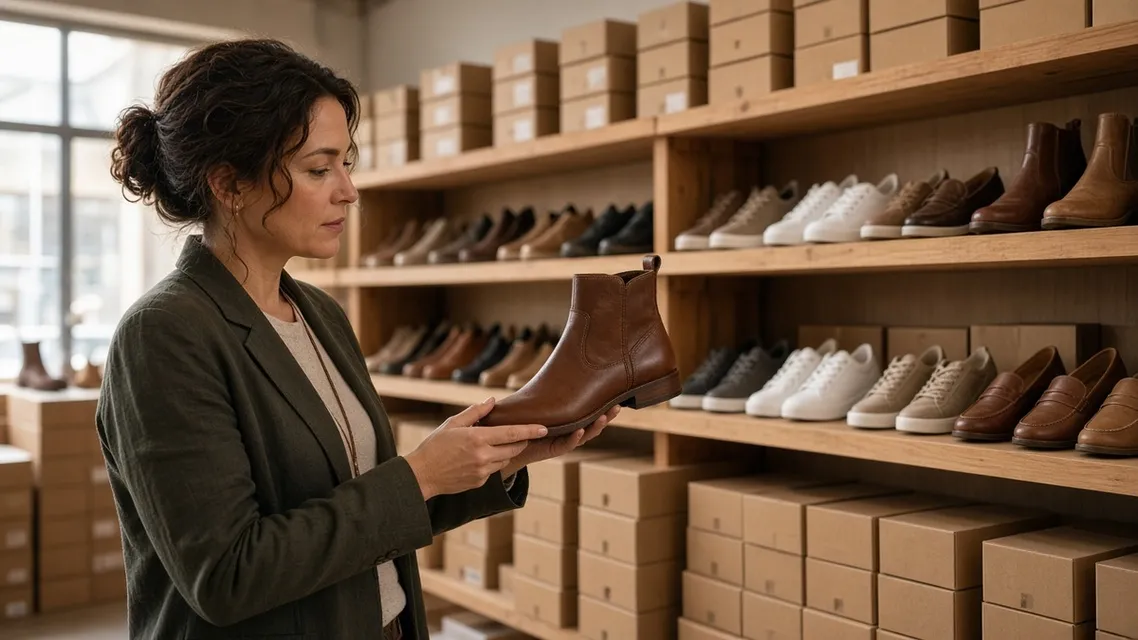
Shoes are one of the hardest categories to buy well at wholesale. Every style multiplies into sizes and widths, every season has a short sell-through window, and in 2026 the landed cost of an imported pair has moved more than most retailers can remember. According to the Footwear Distributors and Retailers of America (FDRA), as reported by Footwear News, US retail footwear prices reached a seasonally adjusted record in October 2026, and FDRA's chief economist expects prices to keep rising, at a slower pace, into 2027.
This guide is for shoe stores, boutiques, uniform and work-wear shops, sporting goods retailers and online resellers who want to buy wholesale shoes and footwear in the US without guessing. It covers the supplier types you will meet, how footwear pricing and minimums work, what the 2026 tariff picture means for your open-to-buy, the compliance checks that apply to children's shoes and imports, and the 2027 trade shows where most footwear orders are still written. If you also stock apparel or accessories, read it alongside our wholesale clothing suppliers guide and our fashion accessories sourcing guide.
📌 Quick link: Browse footwear suppliers on Clever Wholesale: Shoes and Footwear · Fashion Shoes · Sports Shoes · Men's Dress Shoes.
Who Sells Shoes at Wholesale in the USA
The Census Bureau groups footwear distributors under NAICS 424340, Footwear Merchant Wholesalers, which covers businesses primarily engaged in the merchant wholesale distribution of footwear of all kinds. In practice, a retailer meets several quite different kinds of seller under that heading, and each one suits a different stage of a business.
| Supplier type | What they offer | Typical buyer | Watch out for |
|---|---|---|---|
| Brand wholesale accounts | Current-season styles direct from the brand or its US subsidiary, with full size runs, marketing assets and at-once replenishment on core styles | Established shoe stores and boutiques with a physical storefront or a strong online presence | Account approval, opening order minimums, MAP pricing and territory or online-selling rules |
| Independent sales reps and agencies | Several brands in one territory; they write orders at trade shows and in-store | Independent retailers who want to see product before ordering | Pre-book timing: you often commit months before delivery |
| Footwear distributors and importers | Their own labels or licensed brands, often with stock in a US warehouse and smaller case packs | Discount stores, general merchandise retailers, work-wear and uniform shops, online sellers | Fixed size assortments (prepacks) that may not match your customers |
| Private label manufacturers and agents | Your own design or a modified factory design, made overseas to your spec | Retailers with volume and a clear brand idea | High minimums per style and color, long lead times, and you become the importer of record |
| Closeout and off-price buyers | Prior-season, cancelled orders and overstock, often sold by the pallet or by mixed lot | Off-price retailers, flea-market and online resellers | Broken size runs, no reorders, and manifests that do not always match the boxes |
Most independent stores use two or three of these at once: a few brand accounts for the styles customers ask for by name, a distributor for basics and fill-ins, and occasional closeouts for promotions. Our guide to B2B wholesale suppliers, trade accounts and net terms explains how to open accounts and negotiate terms with each supplier type.
How Wholesale Footwear Pricing and Minimums Work
Footwear is sold in sizes, and that is where most new buyers lose money. A distributor may quote one price per pair, but you will usually buy a case or a prepack: a carton containing a fixed spread of sizes for one style and color. Brands that sell through reps more often let you build your own size run, but they set an opening order minimum for the account and sometimes a minimum per style.
Questions to ask before you place a first order
- What is the size curve? Ask for the exact sizes and widths in each prepack, and compare them with your own sales history or your customer base (for example, a women's fashion store will sell a different curve from a men's work boot shop).
- Is this at-once or pre-book? At-once stock ships from a US warehouse now. Pre-book orders are written at shows and markets for delivery in a future season and are often cheaper or come with better terms, but you carry the forecasting risk.
- What are the reorder rules? Core styles (often called never-out-of-stock programs) can be replenished; seasonal styles usually cannot.
- What are the payment terms? New accounts often start on prepayment or credit card; net 30 or longer usually comes after a credit check and some order history.
- What is the return and defect policy? Get the process for factory defects, wrong sizes and shipping damage in writing before the first delivery.
- Are there online or marketplace restrictions? Many footwear brands control where and at what price their shoes can be advertised. Read the dealer terms before you list on a marketplace.
Keep your resale certificate ready. Most US states accept a resale or exemption certificate so you do not pay sales tax on inventory you will resell, and many multistate suppliers accept the Multistate Tax Commission's Uniform Sales and Use Tax Exemption Certificate where the state allows it. Check your own state's rules before you rely on it.
What Footwear to Stock: Matching Categories to Your Store
The best shoe assortment depends on who walks through your door, not on what is trending on social media. The table below links each common footwear segment to the Clever Wholesale category where you can shortlist suppliers.
| Segment | Who buys it | Buying notes | Where to look |
|---|---|---|---|
| Fashion shoes (heels, flats, sandals, fashion boots) | Women's boutiques, department and online fashion stores | Strongly seasonal; buy tight size runs and plan for markdowns at season end | Wholesale fashion shoes |
| Athletic and sports shoes | Sporting goods stores, running and team dealers, gyms | Brand-driven with strict account approval; distributors are useful for team and value lines | Wholesale sports shoes |
| Men's dress and business shoes | Menswear stores, formalwear and uniform retailers | Width availability matters; core black and brown styles reorder well | Wholesale men's dress shoes |
| Casual, comfort and everyday footwear | General footwear stores, pharmacies, gift and resort shops | Good fit for distributors with US stock and prepacks | All shoes and footwear suppliers |
| Slippers, flip-flops and seasonal basics | Variety, discount, resort and gift retailers | Low price points; check case packs and freight cost per pair carefully | All shoes and footwear suppliers |
If your store sells clothing, matching footwear to your apparel buy is usually more profitable than carrying a wide shoe range on its own. Belts, bags and socks bought from the same suppliers can raise the average order value; see our handbags, hats, sunglasses and belts guide for that side of the buy.
The 2026 Tariff Picture for Imported Shoes
Most shoes sold in the US are imported, so tariffs feed straight into your wholesale price, even when you buy from a domestic distributor. Here is what buyers should know as of November 2026, using official and industry sources.
- Footwear started from a high base. FDRA says that while tariffs on consumer goods average just over 2 percent, footwear tariffs average more than 12 percent, and some children's shoes face rates near 50 percent even before additional tariffs (FDRA, August 2026).
- A new Section 301 layer applies since July 24, 2026. The US Trade Representative's forced-labor Section 301 action added duties of 10 percent or 12.5 percent on products of 60 economies, with exemptions listed in its annexes. CBP guidance (CSMS #69326983) confirms, for example, an additional 12.5 percent on products of Vietnam unless an exemption applies.
- The duty bill has roughly doubled. FDRA's chief executive told International Trade Today in October 2026 that footwear importers paid $6.2 billion in tariffs, compared with a more typical $3 billion.
- Another decision is pending. USTR's Section 301 investigation into structural excess capacity covers 16 economies, including China, Vietnam, Cambodia and Indonesia. Its initiation notice cites footwear among China's export sectors and Cambodia's garment, footwear and travel goods exports. No determination has been published at the time of writing.
- Families are feeling it. In November 2026 FDRA said combined tariffs on many children's shoes reach as high as 87.5 percent and called for tariff relief on everyday necessities (FDRA statement).
Sourcing has also shifted. Census trade data compiled by Capisaga shows Vietnam supplied 38.4 percent of US footwear imports by value in the 12 months to September 2026, ahead of China at 20.4 percent, Indonesia at 11.7 percent and Cambodia at 6.5 percent. In 2017 China's share was 55.6 percent. Most of those countries now carry the new Section 301 duty, so moving a style from one Asian factory to another no longer guarantees a lower landed cost.
| Cost pressure | What the source says | What a buyer can do |
|---|---|---|
| Tariffs | Footwear tariffs average more than 12% before the 2026 Section 301 layer (FDRA) | Ask suppliers whether quoted prices are duty-paid (DDP) and when they were last re-costed |
| Materials | Some FDRA members reported up to a 25% rise in petroleum-based inputs; FDRA estimated that could mean about a 5% higher finished-shoe cost (FDRA, July 2026) | Lock prices for pre-book orders in writing, with a clear validity date |
| Freight | FDRA said container rates were spiking as companies front-loaded imports ahead of possible tariffs (July 2026) | Buy more from US-warehoused stock for at-once needs; keep imports for planned seasons |
| Retail prices | US footwear prices rose 2.1% over six months to October 2026 and hit a seasonal record (FDRA via Footwear News) | Review retail price points now; customers expect some increase in 2027 |
Always confirm the duty for a specific shoe in the official Harmonized Tariff Schedule; footwear rates depend on the upper and sole material, the construction and the value per pair, so two similar-looking shoes can have very different duties.
Compliance Checks Before You Import or Resell
Children's shoes
Shoes designed or intended mainly for children 12 and younger are children's products. The Consumer Product Safety Commission requires domestic manufacturers and importers of children's products that are subject to a children's product safety rule to issue a Children's Product Certificate based on testing by a CPSC-accepted third-party laboratory. The CPSC also notes that, from July 8, 2026, importers of most regulated consumer products must electronically file certificate data with CBP. If you buy kids' shoes from a US distributor, ask for the certificate; if you import them yourself, the obligation is yours.
Country of origin marking
Imported shoes must be marked with their country of origin under 19 CFR Part 134, usually on the shoe itself, in a way the end customer can see. Unmarked or obviously remarked closeout goods are a warning sign.
Forced labor rules
US forced-labor import rules apply to footwear like any other product, and an importer can have goods detained at the port if the supply chain cannot be documented. Before you sign a private label program, read our UFLPA and withhold release order compliance guide and ask the factory for its material traceability documents.
Closeouts and Off-Price Shoes
Closeout footwear can be very profitable, especially for off-price stores and online resellers, but it rewards careful buyers. Ask for a manifest by style, color and size before you pay; check whether lots are first quality, customer returns or shelf-pulls; and price in the cost of broken size runs that will take longer to sell. Our guide to buying liquidation, closeouts, pallets and overstock covers manifests, grading and how to avoid counterfeit branded goods. Be especially careful with famous athletic brands offered at very low prices by unknown sellers.
2027 Footwear Trade Shows for US Buyers
Footwear trade shows are still where many independent stores meet reps, see samples and write pre-book orders. The Footwear Trade Show Council's 2027 calendar preview lists the main events; dates are subject to change, so confirm with each organizer.
| Show | 2027 dates | Location | Good for |
|---|---|---|---|
| FFANY Market Week | February 1–5 (and August 2–6) | New York City | Women's and fashion footwear brands meeting buyers |
| Chicago Shoe Market | February 3–4 | Lombard, IL | Midwest independents and regional reps |
| Atlanta Shoe Market | February 13–15 (and August 14–16) | Cobb Convention Center, Atlanta, GA | Large regional show with broad brand coverage; official dates |
| MAGIC Las Vegas | February 16–18 (and August 16–18) | Las Vegas Convention Center | Footwear alongside apparel and accessories for multi-category stores |
How to Vet a Footwear Supplier
A good footwear supplier is easy to check. Before you send money, confirm the following.
- A real business address, a working phone number and a sales contact who can answer questions about sizing and replenishment.
- Proof of authorization if they sell a brand they do not own (a dealer letter or the brand's own dealer locator).
- Sample pairs before a large order, so you can check fit, materials and the box and labels.
- Clear written terms on prepacks, defects, returns, and shipping costs per carton.
- For imports: country of origin, the HTS number they use, and whether the price includes duty.
- For children's shoes: a Children's Product Certificate and test reports.
Use the Shoes and Footwear category to shortlist suppliers, then compare them with our step-by-step guide on how to find wholesale suppliers in the USA. If you want more options, our list of the best wholesale directories in the USA shows where else US retailers search for vetted suppliers.
Frequently Asked Questions
Can a small store buy wholesale shoes without a big minimum?
Yes. US footwear distributors that keep stock in a domestic warehouse often sell by the case or prepack, which keeps the first order small. Brand accounts tend to set higher opening minimums, so many new stores start with distributors and add brand accounts once they have sales history.
What is a prepack in footwear?
A prepack is a carton of one style and color with a fixed spread of sizes, for example a set number of pairs from size 6 to 10. It is simple to order but may include sizes your customers rarely buy, so check the size curve before you commit.
Will wholesale shoe prices go up in 2027?
FDRA expects retail footwear prices to keep rising into 2027 at a slower rate, citing higher import costs. A pending USTR decision on structural excess capacity could add further duties for some countries, so ask suppliers how long their quoted prices are valid.
Do I need a license to buy wholesale shoes?
Most suppliers want a business registration and a resale certificate (seller's permit) before they open a trade account. Requirements differ by state, so check with your state tax agency.
Is it safe to buy branded sneakers from closeout sellers?
Only if you can verify the source. Ask for proof of where the goods came from, check samples, and be wary of current-season styles from famous brands at far below normal wholesale prices. Counterfeit footwear can be seized, and selling it can cost you marketplace accounts.
Should I import shoes directly from a factory?
Direct import can lower unit costs, but you become the importer of record and carry the duty, compliance and inventory risk. With 2026 Section 301 duties and a pending overcapacity decision, many smaller retailers are better served by US distributors until their volume justifies a private label program.
Related Reading
- Wholesale Clothing Suppliers USA: The Complete 2026 Sourcing Guide
- Wholesale Fashion Accessories USA: Handbags, Hats, Sunglasses and Belts
- How to Find Wholesale Suppliers in the USA
- 15 Best Wholesale Directories USA (Free & Paid)
- Wholesale Liquidation: How to Buy Closeouts, Pallets and Overstock
- B2B Wholesale Suppliers USA: Trade Accounts and Net Terms
- Forced Labor Import Rules in 2027: UFLPA and WRO Compliance
Last updated: November 20, 2026. Price and tariff data are from FDRA press releases (July, August and November 2026), Footwear News (November 10, 2026) and International Trade Today (October 22, 2026). Import shares are Census trade data as compiled by Capisaga (12 months to September 2026). Section 301 details are from USTR and CBP CSMS #69326983; the excess capacity investigation status is from USTR's investigation page. 2027 trade show dates are from the Footwear Trade Show Council, Atlanta Shoe Market and MAGIC and may change. NAICS 424340 is the Census Bureau classification for footwear merchant wholesalers. This is general information, not customs, tax or legal advice.





Leave Comment Below